Are you tired of unevenly heated meals, cold spots, or waiting ages for your food to cook? The right microwave oven can revolutionize your kitchen experience, and a 1000 watt model often hits that sweet spot for power, speed, and versatility. In today’s fast-paced world, an efficient microwave is no longer just a luxury but a necessity for many households, from reheating leftovers to preparing entire meals. This guide will delve into everything you need to know about 1000 watt microwave ovens, helping you understand their benefits, features, and how to choose the perfect one for your home.
What is a Microwave Oven? Basic Operating Principles
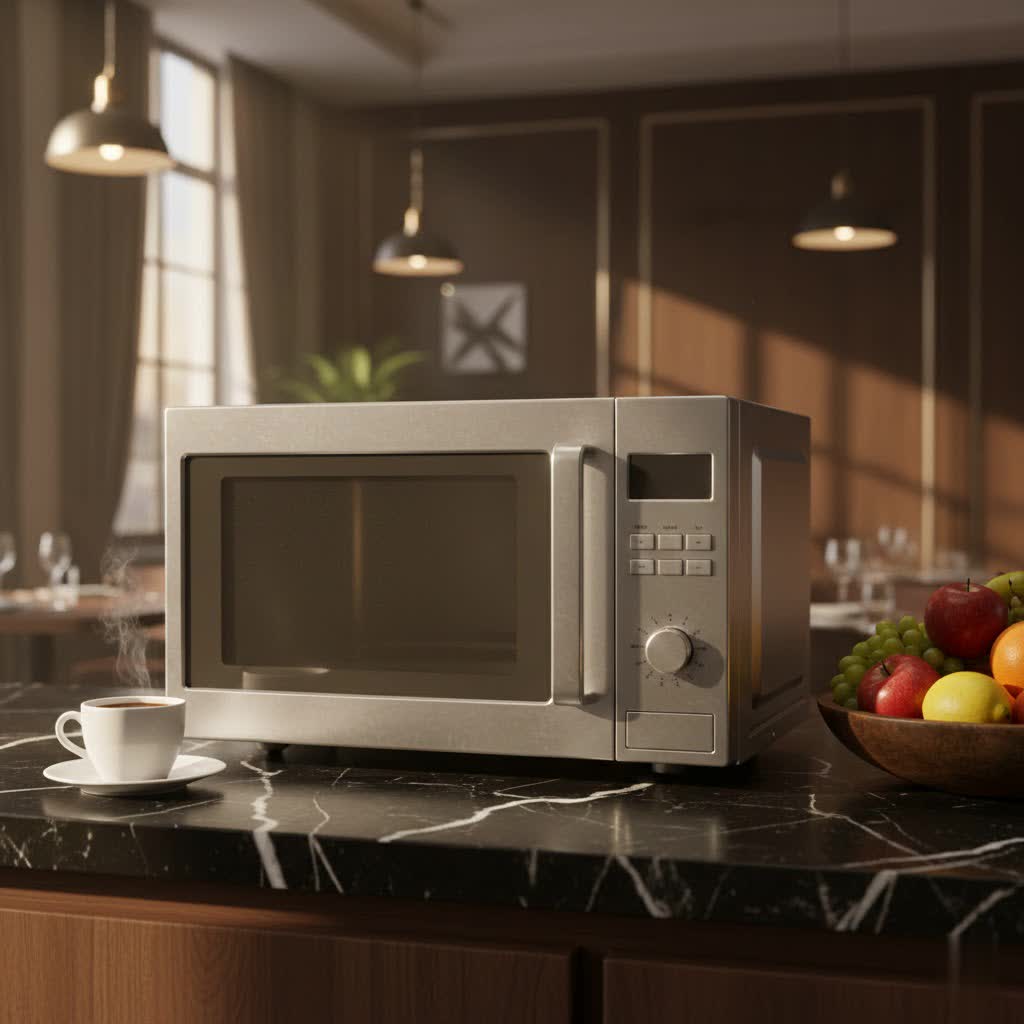
A microwave oven is a kitchen appliance that heats and cooks food by exposing it to electromagnetic radiation in the microwave frequency range. Its primary purpose is to rapidly heat food, defrost frozen items, and sometimes even cook dishes from scratch. The magic behind a microwave lies in its core component, the magnetron, which converts electricity into microwaves. These high-frequency radio waves are then directed into the cooking chamber, where they interact with the water molecules in food.
When microwaves penetrate food, they cause water, fat, and sugar molecules to vibrate rapidly. This molecular friction generates heat, cooking the food from within. Unlike conventional ovens that heat food from the outside in, microwaves excite molecules throughout the food, leading to faster cooking times. The concept of microwave heating was accidentally discovered by Percy Spencer in the 1940s while working on radar technology, leading to the development of the first commercial microwave ovens in the mid-20th century, which have since become a staple in kitchens worldwide.
Popular Microwave Oven Classifications on the Market
Microwave ovens are not one-size-fits-all; they come in various types, each designed to meet different needs and kitchen layouts. Understanding these classifications is crucial for making an informed purchase, especially when considering a powerful 1000 watt model.
By Function:
- Basic Microwave Ovens (Heating, Defrosting Only): These entry-level models are perfect for simple tasks like reheating leftovers, defrosting ingredients, and warming beverages. They typically have straightforward controls and fewer advanced features.
- Microwave Ovens with Grill Function (Combined Grilling): Offering more versatility, these models integrate a grilling element alongside standard microwave functions. This allows you to achieve a crispy, browned finish on foods that might otherwise turn out soggy in a conventional microwave, enhancing dishes like pizzas or grilled sandwiches.
- Steam Microwave Ovens (Utilizing Steam for Cooking): For healthier cooking options, steam microwaves use steam to cook vegetables, fish, and other foods, preserving nutrients and moisture. This method is excellent for achieving tender, flavorful results without drying out your ingredients.
|
Our Picks for the Best Microwave Oven in 2026
As an Amazon Associate I earn from qualifying purchases.
|
||
| Num | Product | Action |
|---|---|---|
| 1 | Beautiful 1.1 Cu Ft 1000W Sensor Microwave Oven – Compact Countertop with Smart Sensor Cooking, 10 Power Levels & Easy Clean Interior – Perfect for Quick Meals, Office & Holiday Hosting |

|
| 2 | Farberware 1.1 Cu. Ft. Countertop Microwave Oven – 1000 Watts Power, Auto Cook Settings, Defrost, Easy Clean and Child Safety Lock - Stainless |
|
| 3 | BLACK+DECKER EM720CB7 Digital Microwave Oven with Turntable Push-Button Door, Child Safety Lock, 700W, Stainless Steel, 0.7 Cu.ft |
|
| 4 | TOSHIBA EM131A5C-BS Countertop Microwave Ovens 1.2 Cu Ft, 12.4" Removable Turntable Smart Humidity Sensor 12 Auto Menus Mute Function ECO Mode Easy Clean Interior Black Color 1000W |
|
| 5 | Chefman Countertop Microwave Oven 0.7 Cu. Ft., 700 Watts with 10 Power Levels, 6 Cooking Presets with One-Touch Express Cook, Eco Mode, Child Safety Lock, & Mute Button - Black |
|
| 6 | Nostalgia Retro Compact Countertop Microwave Oven, 0.7 Cu. Ft. 700-Watts with LED Digital Display, Child Lock, Easy Clean Interior, Aqua |
|
| 7 | TOSHIBA EM131A5C-SS Countertop Microwave Ovens 1.2 Cu Ft with 12.4" Removable Turntable Smart Humidity Sensor, 12 Auto Menus Mute Function ECO Mode Easy Clean Interior, 1000W, Silver |
|
| 8 | Farberware 1.1 Cu. Ft. Countertop Microwave Oven – 1000 Watts Power, Auto Cook Settings, Defrost, Easy Clean and Child Safety Lock - Stainless and Black |
|
| 9 | Farberware 1.1 Cu. Ft. Countertop Microwave Oven – 1000 Watt Power, Auto Cook Settings, Defrost, Easy Clean and Child Safety Lock - Stainless |
|
| 10 | TOSHIBA ML-EM09PA(BS) Small Microwave Oven with 6 Auto Menus, Mute Function & Child Lock, LED Lighting, Perfect for Apartment, 0.9 Cu Ft, 10.6 Inch Removable Turntable, 900W, Black Stainless Steel |
|
By Installation Method:
- Countertop Microwave Ovens: These are the most common and portable type. They sit directly on your kitchen counter, requiring no special installation other than a power outlet. A 1000 watt countertop microwave is a popular choice for its balance of power and ease of use.
- Built-in Microwave Ovens: Designed for seamless integration into kitchen cabinetry, built-in models offer a sleek, custom look. They save counter space but require professional installation and are generally more expensive.
- Over-the-Range (OTR) Microwave Ovens: These units are installed above your range or cooktop, combining a microwave with a ventilation system to remove smoke and odors. They are excellent space-savers and a popular choice for many modern kitchens, often available in 1000 watt configurations.
By Technology:
- Standard Microwave Ovens: These microwaves use a magnetron that cycles on and off at full power to achieve lower power levels. This can sometimes lead to uneven cooking, especially with delicate foods.
- Inverter Microwave Ovens (Energy Saving): Inverter technology provides a continuous, consistent stream of microwave power at various settings, rather than cycling full power on and off. This results in more even cooking, better defrosting, and often faster results, along with increased energy efficiency. Many high-performance 1000 watt microwaves now incorporate inverter technology.
Comparison Table of Microwave Oven Types
| Feature / Type | Basic Microwave | Microwave with Grill | Steam Microwave | Inverter Microwave |
|---|---|---|---|---|
| Primary Function | Reheating, defrosting | Reheating, defrosting, grilling | Healthy steaming, reheating | Even cooking, versatile power |
| 1000 Watt Benefit | Very fast heating | Fast heating + crispy finish | Fast healthy cooking | Fastest, most even heating |
| Price Range | Low to Medium | Medium to High | Medium to High | Medium to High |
| Pros | Affordable, simple | Adds texture, versatile | Healthier cooking, moist food | Even results, faster, energy efficient |
| Cons | Limited functions | Can be slower for grilling | Specialized, may cost more | Higher upfront cost |
| Best For | Everyday quick tasks | Those who like crispy food | Health-conscious cooking | All-around performance, precision |
Your Buying Guide for the Perfect Microwave Oven
Choosing the right microwave, especially a powerful 1000-watt model, involves considering several factors beyond just its wattage. A thoughtful selection ensures that the appliance meets your lifestyle and culinary demands.
Determining Your Usage Needs:
Before diving into specifications, assess how you’ll primarily use the microwave.
- Family Size: For individuals or couples, a smaller capacity 1000 watt microwave might suffice. Larger families or those who frequently entertain will benefit from a more spacious model.
- Usage Frequency: If you use your microwave multiple times a day for various tasks, a durable, feature-rich 1000 watt model is a wise investment. Occasional users might find simpler models adequate.
- Purpose of Use: Are you mainly reheating, defrosting, or do you plan to cook full meals, roast, or even steam? A 1000 watt microwave offers the power for diverse tasks, but specific functions like grilling or steaming will require specialized models.
Selecting the Appropriate Oven Capacity:
Capacity is measured in cubic feet or liters and dictates how much food the microwave can hold.
- Small Capacity (Under 20 Liters / 0.7 cu ft): Ideal for 1-2 people, perfect for single servings, warming drinks, and small dishes.
- Medium Capacity (20-30 Liters / 0.8-1.2 cu ft): Suitable for 3-4 people, accommodating standard dinner plates and larger casseroles. Many 1000 watt microwaves fall into this range, offering a good balance of footprint and utility.
- Large Capacity (Over 30 Liters / 1.3 cu ft and above): Best for large families, extensive meal prep, or fitting oversized dishes. A 1000 watt model in this size can handle substantial cooking tasks with ease.
Choosing the Right Oven Power (Wattage):
Wattage directly correlates with cooking speed and efficiency. A 1000 watt microwave is considered an excellent standard for most households.
- Lower Power (Under 800W): Suitable for basic reheating and defrosting, but cooking times will be longer and heating less even.
- 1000 Watts: This wattage is highly recommended for versatile and efficient cooking. It heats food quickly and evenly, reducing cold spots and handling denser foods more effectively than lower wattage models. Many recipes are calibrated for 1000 watts, ensuring consistent results.
- Higher Power (Over 1000W): Models like 1100W or 1200W offer marginally faster cooking, but for most home cooks, the difference compared to 1000W is often negligible, while the price might be higher.
“A 1000 watt microwave strikes an optimal balance between rapid cooking times and energy efficiency for the average household. It’s truly a sweet spot for everyday culinary demands.”
Selecting Convenient Features:
Modern 1000 watt microwaves come packed with features designed to enhance user experience and cooking versatility.
- Timer Function: Essential for precise cooking and reminders.
- Child Lock Function: A crucial safety feature for households with young children, preventing accidental operation.
- Auto-Cook Functions: Pre-programmed settings for popular foods like popcorn, potatoes, or pizza, taking the guesswork out of cooking times.
- Deodorizing Function: Helps eliminate lingering food odors after cooking, keeping your kitchen fresh.
- Inverter Technology: As mentioned, this ensures continuous power delivery for more even cooking and defrosting, a significant upgrade over traditional models.
- Sensor Cooking: Utilizes built-in sensors to detect humidity levels and automatically adjust cooking time and power for optimal results.
- Turntable On/Off: Allows you to halt the turntable’s rotation, useful for accommodating large, rectangular dishes that wouldn’t otherwise fit.
Opting for Reputable Brands:
Investing in a well-known brand often means better quality, reliability, and customer support. Leading microwave brands like Sharp, Panasonic, Electrolux, Samsung, and LG frequently offer excellent 1000 watt models known for their performance and durability.
Thorough Product Inspection Before Purchase:
Always inspect the microwave before buying.
- Exterior and Interior: Check for any dents, scratches, or manufacturing flaws.
- Functions: If possible, test basic functions like door opening, button responsiveness, and turntable rotation.
- Accessories: Ensure all advertised accessories, such as turntables or racks, are included.
Consulting Other User Reviews:
Online reviews and expert assessments can provide valuable insights into real-world performance, common issues, and overall user satisfaction for specific 1000 watt models.
Top Popular 1000 Watt Microwave Oven Models Currently
The market offers a wide array of 1000 watt microwave ovens, each with its unique blend of features and design. While specific models and availability change, certain brands consistently deliver high-performing 1000 watt options.
Many reviewers highlight models like the Toshiba Countertop Microwave Oven for its even heat distribution, sensor cooking, and durable design. It’s often praised for its ability to melt cheese perfectly and cook items like baked potatoes flawlessly. Another strong contender is the Hamilton Beach White Stainless Steel Microwave, often noted for its impressive popcorn preset and powerful output at a budget-friendly price. It frequently offers excellent performance that rivals more expensive models.
For those seeking more advanced features, Panasonic’s inverter technology microwaves in the 1000-watt range (and often up to 1200W) are highly regarded for their consistent power delivery, which results in more evenly cooked food. Some Panasonic models even come with multi-function capabilities, acting as a microwave, air fryer, broiler, and convection oven, saving significant counter space. Similarly, Black+Decker offers popular 1000 watt over-the-range and countertop options, often lauded for their practical features like turntable on/off function and easy-to-use controls. Magic Chef also receives praise for its 1000-watt models, especially for heating frozen foods quickly and efficiently.
When comparing specific models, consider features like inverter technology for more even cooking, sensor cooking for automated adjustments, pre-programmed settings for convenience, and the overall capacity to match your household size and cooking habits. Look for models with an ergonomic design, intuitive control panels, and a child lock for safety.
How to Properly Use and Maintain Your Microwave Oven
To maximize the lifespan and ensure safe operation of your 1000 watt microwave, proper usage and regular maintenance are key.
Guide to Using Microwave Functions:
- Understand Power Levels: Your 1000 watt microwave likely has multiple power levels (e.g., 100%, 70%, 50%). Use full power for fast reheating and boiling, and lower settings for delicate foods, simmering, or softening butter to prevent overcooking.
- Defrosting: Use the designated defrost setting, either by weight or time. Stir or flip food halfway through for even thawing.
- Sensor Cooking: If available, let the sensor cooking feature do the work for you. It detects steam to determine when food is cooked, eliminating guesswork.
- Appropriate Cookware: Always use microwave-safe dishes made of glass, ceramic, or plastic. Avoid metal or foil, which can cause sparks and damage the appliance.
Cleaning and Maintaining Your Microwave for Longevity:
Regular cleaning prevents food build-up and ensures efficient operation.
- Daily Wipes: After each use, wipe down the interior with a damp cloth to remove splatters.
- Deep Cleaning: For stubborn stains, place a bowl of water with lemon slices or vinegar inside and microwave on high for 5-10 minutes. The steam will loosen grime, making it easy to wipe away.
- Turntable Care: Remove and wash the glass turntable and its support ring regularly with warm, soapy water.
- Exterior Cleaning: Wipe the exterior with a soft, damp cloth. Avoid abrasive cleaners.
- Door Seal: Keep the door seal clean to ensure a tight closure, which is vital for safe and efficient operation.
Important Safety Considerations When Using a Microwave:
- Never Run Empty: Operating a microwave without anything inside can damage the magnetron.
- Ventilation: Ensure adequate space around countertop models for proper ventilation.
- Puncturing Food: Pierce foods with skins (like potatoes or hot dogs) before microwaving to prevent them from exploding.
- Check for Leaks: If you notice any damage to the door, hinges, or latch, stop using the microwave and have it inspected by a professional.
- Beware of Superheating: Liquids can become superheated in a microwave, meaning they heat above their boiling point without bubbling. Be cautious when removing hot liquids.
Common Microwave Oven Problems and Troubleshooting Tips
Even the most reliable 1000 watt microwave can encounter issues. Knowing how to identify and address common problems can save you time and potentially a repair call.
- Microwave Not Heating:
- Check Power: Ensure it’s plugged in correctly and the circuit breaker hasn’t tripped.
- Door Latch: The door must be securely closed for the microwave to operate. Check if the latch is broken or obstructed.
- Faulty Magnetron: If power is on but no heat, the magnetron might be faulty, requiring professional repair.
- Turntable Not Rotating:
- Placement: Ensure the turntable plate is correctly seated on its support and the motor coupler.
- Obstruction: Check for food debris or foreign objects blocking its rotation.
- Motor Issue: If clear, the turntable motor might be faulty.
- Strange Noises or Sparks:
- Metal Objects: Immediately stop the microwave and check for any metal cookware or foil inside.
- Waveguide Cover: A dirty or damaged waveguide cover (often a mica sheet inside) can cause sparks. It may need cleaning or replacement.
- Arcing: If sparks persist, it could indicate a more serious electrical issue, requiring professional service.
- Uneven Heating:
- Stirring/Flipping: Some foods require stirring or flipping halfway through cooking for even results.
- Power Level: For certain foods, a slightly lower power setting for a longer duration can promote more even heating, especially if your 1000 watt microwave is very powerful.
- Inverter Technology: If you consistently experience uneven heating, consider an inverter microwave for better consistency.
When to Call a Repair Technician:
For complex issues like a non-heating magnetron, persistent sparking, electrical faults, or a damaged door seal, it’s always best to contact a qualified appliance repair technician. Attempting DIY repairs on microwave ovens can be dangerous due to high-voltage components.
Conclusion
A 1000 watt microwave oven is an invaluable asset in any modern kitchen, striking an excellent balance between speed, efficiency, and versatility. By understanding its fundamental principles, the various types available, and how to effectively choose and maintain one, you can significantly enhance your cooking experience. From rapid reheating to efficient defrosting and even preparing complete meals, a 1000 watt model empowers you to handle diverse culinary tasks with confidence. Remember to prioritize safety, regular cleaning, and seek professional help for complex issues to ensure your appliance serves you well for years to come.
What culinary creations will you bring to life with the power of your new 1000 watt microwave?
Frequently Asked Questions
Is a 1000 watt microwave powerful enough for all cooking needs?
Yes, a 1000 watt microwave is generally considered very powerful and suitable for almost all household cooking needs. It heats food quickly and evenly, handles dense items well, and is a common wattage used in most microwave recipes, providing excellent performance for everyday tasks.
How much energy does a 1000 watt microwave consume?
A 1000 watt microwave used for an average of 15 minutes per day consumes approximately 0.25 kilowatt-hours (kWh) daily, or about 63.9 kWh annually. Actual consumption can vary based on your specific usage habits and local electricity rates.
What is the difference between a 1000 watt and a 700 watt microwave?
The primary difference is cooking speed and efficiency. A 1000 watt microwave heats food significantly faster and more evenly than a 700 watt model, reducing cooking times by several minutes for many dishes and minimizing cold spots.
Can I use metal in a 1000 watt microwave?
No, you should never use metal or aluminum foil in any microwave oven, including a 1000 watt model. Metal reflects microwaves, which can cause arcing, sparks, and potentially damage the appliance or start a fire.
Do 1000 watt microwaves always cook faster than lower wattage models?
Yes, generally, a 1000 watt microwave will cook food faster than lower wattage models (e.g., 700W or 900W) because it delivers more microwave energy per second. This higher power output translates directly into reduced cooking times and more efficient heating.
