Imagine a world where reheating leftovers meant firing up a stove, and a quick meal was anything but. Before the advent of the microwave oven, kitchen routines were drastically different. This revolutionary appliance, now a staple in over 90% of American homes, began not as a deliberate invention but as a fascinating accident during wartime innovation. Understanding its origins reveals a tale of serendipity, scientific ingenuity, and a relentless drive to transform how we prepare food. Let’s explore the humble beginnings of the first microwave oven and trace its journey from a colossal commercial unit to the compact countertop marvel we rely on today.
What is a Microwave Oven? Basic Operating Principles and Its Early Days
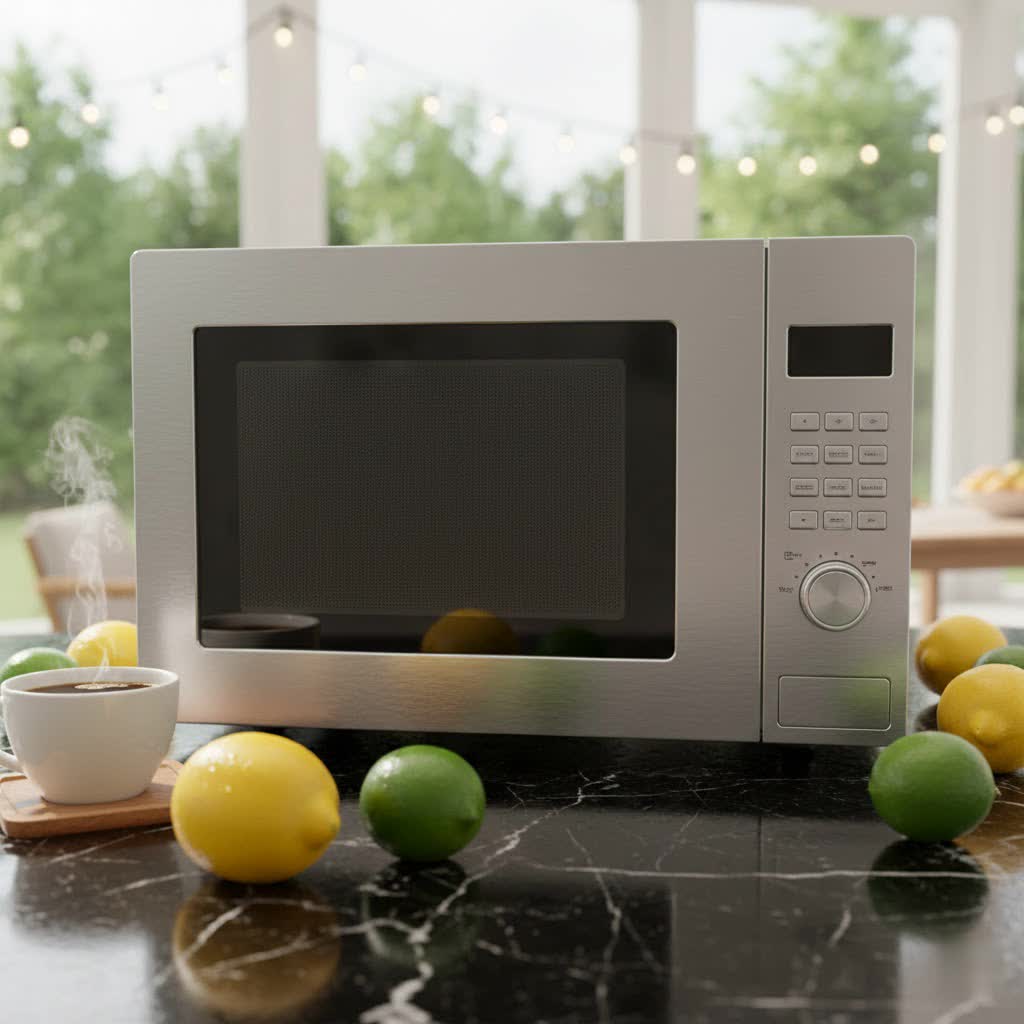
A microwave oven is a kitchen appliance that utilizes microwave radiation to heat and cook food efficiently. Unlike conventional ovens that rely on external heat sources, microwaves generate electromagnetic waves that penetrate food, causing water molecules within it to vibrate rapidly and produce heat. This fundamental principle was accidentally discovered by Percy Spencer, a self-taught American engineer working at Raytheon.
The story of the microwave oven truly begins with the cavity magnetron tube, invented in 1940 by British physicists John Randall and Harry Boot at Birmingham University. This powerful vacuum tube was crucial for generating the short-wavelength radio waves used in radar systems during World War II, essential for detecting enemy aircraft and ships. Spencer was responsible for developing systems to mass-produce these magnetrons for Raytheon.
In 1945, while working on an active radar set, Spencer noticed a candy bar in his pocket had melted rapidly. Intrigued, he experimented further, directing the magnetron’s energy toward popcorn kernels, which promptly popped, and then an egg, which cooked so quickly it exploded. These observations sparked the idea that microwaves could be harnessed for cooking. Spencer swiftly filed the first patent for what would become the modern microwave oven later that same year. His accidental discovery leveraged a wartime invention for a completely new, domestic purpose.
Classifying Common Microwave Ovens on the Market
The journey from the first experimental models to the diverse range of microwave ovens available today highlights remarkable advancements in function and design. Modern microwaves cater to a wide array of cooking needs and kitchen aesthetics.
By Function: From Basic Reheating to Gourmet Cooking
Modern microwave ovens are categorized by their primary functionalities, extending far beyond simple reheating.
- Basic Microwave Ovens: These are the simplest models, primarily designed for reheating, defrosting, and cooking straightforward dishes. They are ideal for individuals or small families with basic heating needs.
- Microwave Ovens with Grill Function: Incorporating a grilling element, these ovens allow users to crisp, brown, and grill food, adding texture that a standard microwave cannot achieve. This hybrid functionality offers more versatile cooking options.
- Convection Microwave Ovens: These advanced models combine microwave technology with a convection fan and heating element, enabling them to bake and roast like a traditional oven. They provide uniform cooking and browning, making them suitable for a wider range of culinary tasks.
- Steam Microwave Ovens: Utilizing steam generation, these ovens are designed for healthier cooking, preserving nutrients and moisture in food. They are excellent for vegetables, fish, and rehydrating leftovers without drying them out.
|
Our Picks for the Best Microwave Oven in 2026
As an Amazon Associate I earn from qualifying purchases.
|
||
| Num | Product | Action |
|---|---|---|
| 1 | Farberware 1.1 Cu. Ft. Countertop Microwave Oven – 1000 Watt Power, Auto Cook Settings, Defrost, Easy Clean and Child Safety Lock - Stainless |

|
| 2 | Farberware 1.1 Cu. Ft. Countertop Microwave Oven – 1000 Watts Power, Auto Cook Settings, Defrost, Easy Clean and Child Safety Lock - Stainless and Black |
|
| 3 | Chefman Countertop Microwave Oven 0.7 Cu. Ft., 700 Watts with 10 Power Levels, 6 Cooking Presets with One-Touch Express Cook, Eco Mode, Child Safety Lock, & Mute Button - Black |
|
| 4 | Nostalgia Retro Compact Countertop Microwave Oven, 0.7 Cu. Ft. 700-Watts with LED Digital Display, Child Lock, Easy Clean Interior, Aqua |
|
| 5 | TOSHIBA ML-EM09PA(BS) Small Microwave Oven with 6 Auto Menus, Mute Function & Child Lock, LED Lighting, Perfect for Apartment, 0.9 Cu Ft, 10.6 Inch Removable Turntable, 900W, Black Stainless Steel |
|
| 6 | TOSHIBA EM131A5C-SS Countertop Microwave Ovens 1.2 Cu Ft with 12.4" Removable Turntable Smart Humidity Sensor, 12 Auto Menus Mute Function ECO Mode Easy Clean Interior, 1000W, Silver |
|
| 7 | BLACK+DECKER EM720CB7 Digital Microwave Oven with Turntable Push-Button Door, Child Safety Lock, 700W, Stainless Steel, 0.7 Cu.ft |
|
| 8 | TOSHIBA EM131A5C-BS Countertop Microwave Ovens 1.2 Cu Ft, 12.4" Removable Turntable Smart Humidity Sensor 12 Auto Menus Mute Function ECO Mode Easy Clean Interior Black Color 1000W |
|
| 9 | Beautiful 1.1 Cu Ft 1000W Sensor Microwave Oven – Compact Countertop with Smart Sensor Cooking, 10 Power Levels & Easy Clean Interior – Perfect for Quick Meals, Office & Holiday Hosting |
|
| 10 | Farberware 1.1 Cu. Ft. Countertop Microwave Oven – 1000 Watts Power, Auto Cook Settings, Defrost, Easy Clean and Child Safety Lock - Stainless |
|
By Installation Type: Adapting to Kitchen Layouts
The physical integration of microwave ovens into kitchen designs has also evolved considerably.
- Freestanding Microwave Ovens: These are the most common and versatile type, designed to sit on a countertop or a dedicated shelf. They offer flexibility in placement and are easy to move.
- Built-in Microwave Ovens: Integrated seamlessly into cabinetry, built-in models offer a sleek, streamlined look. They typically require professional installation and are a popular choice for custom kitchen designs.
- Over-the-Range Microwave Ovens: These units combine a microwave oven with an exhaust fan, serving a dual purpose above the cooking range. They save counter space and provide ventilation for the stovetop.
By Technology: Efficiency and Performance
Technological innovations have significantly improved the performance and energy efficiency of microwave ovens.
- Conventional Microwave Ovens: These models use a transformer to generate a consistent level of microwave power. While effective, they may cycle power on and off to achieve lower settings, leading to less consistent cooking at times.
- Inverter Microwave Ovens: Inverter technology provides a continuous, steady stream of microwave power at all settings. This results in more evenly cooked food, better texture preservation, and often greater energy efficiency. They are particularly beneficial for delicate foods and precise cooking.
Comparison Table of Microwave Oven Types
The evolution from the monolithic Radarange to today’s diverse models underscores a focus on user convenience and specialized cooking.
| Feature | Basic Microwave | Grill Microwave | Convection Microwave | Inverter Microwave |
|---|---|---|---|---|
| Primary Use | Reheat, Defrost | Reheat, Grill, Defrost | Bake, Roast, Reheat, Grill | Even Cooking, Reheat, Defrost |
| Cooking Method | Microwaves | Microwaves, Grill | Microwaves, Convection | Consistent Microwaves |
| Cost Range | Low | Medium | High | Medium-High |
| Pros | Simple, Affordable | Adds crispness | Versatile, Multi-functional | Even heating, Energy efficient |
| Cons | Limited functionality | Slower grilling | More complex, Higher cost | Often higher initial cost |
| Ideal For | Quick meals, Small tasks | Adding texture | Full meal preparation | Delicate foods, Better results |
Guide to Choosing the Right Microwave Oven for Your Home
Selecting a microwave oven today involves considering various factors that were unimaginable when Percy Spencer first patented his invention. The right choice can significantly enhance your kitchen’s functionality and your daily cooking experience.
Determine Your Usage Needs
Start by assessing how you’ll primarily use the microwave. Are you mostly reheating leftovers for one or two people, or do you plan to cook full meals for a larger family? Your lifestyle, family size, and cooking habits will guide your choice. Consider the frequency of use and whether you require advanced functions like grilling or baking.
Choose the Appropriate Capacity
Microwave oven capacity is measured in liters or cubic feet, directly impacting the size of dishes you can heat.
- Small (under 20 liters/0.7 cu ft): Ideal for singles or couples, perfect for reheating drinks and small plates.
- Medium (20-30 liters/0.8-1.2 cu ft): Suitable for families of 3-4, accommodating standard dinner plates and most casserole dishes.
- Large (over 30 liters/1.3 cu ft): Best for large families or those who frequently cook for guests, capable of handling larger roasts and platters.
Select the Right Power Level
Microwave power is measured in watts; higher wattage generally means faster cooking.
- Low (under 800W): Best for basic reheating and defrosting, though cooking times will be longer.
- High (over 800W): Recommended for cooking and faster heating, providing more consistent and efficient results. Most modern microwaves fall into this category.
Look for Convenient Features
Today’s microwaves offer an array of features to enhance convenience and safety.
- Timer Function: Essential for precise cooking, allowing you to set specific heating durations.
- Child Lock: A critical safety feature, preventing accidental use by young children.
- Auto-Cook Menus: Pre-programmed settings for common foods (e.g., popcorn, pizza), simplifying operation.
- Defrost by Weight/Time: Smart features that automatically calculate defrosting time based on food weight.
- Sensor Cooking: Detects moisture and humidity in food to automatically adjust cooking time and power for optimal results.
- Odor Removal: A helpful feature to eliminate lingering food smells from the oven cavity.
Choose a Reputable Brand
Investing in a microwave from a well-known brand often ensures better quality, reliability, and customer support. Leading brands in the microwave market include Panasonic, Sharp, Samsung, LG, and Electrolux, each offering a range of models with different features and price points.
Inspect the Product Thoroughly Before Purchase
Before finalizing your purchase, visually inspect the microwave for any damage. Check that all functions work correctly, and ensure all advertised accessories are included. This simple step can prevent future frustrations.
Consult User Reviews
Reading reviews from other users can provide valuable insights into a microwave’s real-world performance, durability, and any potential quirks. Look for consistent feedback regarding cooking efficiency, ease of cleaning, and overall satisfaction.
Top Popular Microwave Oven Models Today
While the first microwave was a behemoth, today’s market offers sleek, efficient, and feature-rich models across various price points, reflecting decades of innovation. Consumers now have an extensive selection, from compact countertop units to sophisticated built-in convection models. Many popular choices emphasize smart features like sensor cooking, inverter technology for even heating, and a variety of pre-set cooking programs. Brands like Panasonic and LG are often lauded for their inverter technology, delivering precise and consistent cooking results. Samsung and Sharp frequently receive high marks for their user-friendly interfaces and durable designs, often integrating grilling capabilities. Electrolux and Bosch are popular in the built-in segment, offering seamless integration and premium aesthetics for modern kitchens. The continuous evolution ensures there’s a perfect microwave for every culinary need and budget.
How to Use and Maintain Your Microwave Oven Properly
The dramatic evolution from the original Radarange to modern microwaves means that while they are far more user-friendly, proper use and maintenance are still key to longevity and safety.
Understanding and Using Functions
Familiarize yourself with your microwave’s specific settings. For instance, always use microwave-safe containers, avoiding metal unless the manufacturer explicitly states it’s safe for certain features like a grill rack. Use the appropriate power level for each task; high power for boiling water or cooking dense foods, and lower power for delicate items or slow defrosting. The auto-cook and sensor cook functions are excellent for beginners, taking the guesswork out of common tasks. Always ensure the door latches securely before starting to prevent microwave leakage.
Cleaning and Maintenance for Extended Lifespan
Regular cleaning is crucial for both hygiene and efficiency. Wipe down the interior and exterior surfaces daily with a damp cloth and mild detergent to prevent food splatters from hardening. For stubborn stains or odors, place a bowl of water with lemon slices or vinegar inside and microwave on high for a few minutes until steam forms. This will loosen grime, making it easy to wipe away. Ensure the turntable and its support ring are clean and properly placed. Never use abrasive cleaners or scourers, as they can damage the microwave’s interior coating.
Essential Safety Tips for Microwave Oven Operation
Despite their convenience, microwaves require careful handling to ensure safety.
- No Metal: Never put metal, aluminum foil, or dishes with metallic rims in the microwave, as they can cause arcing and sparks.
- Ventilation: Ensure the microwave’s air vents are not blocked, allowing for proper heat dissipation.
- Avoid Overheating: Do not overheat liquids, as they can suddenly boil over when disturbed. Stir liquids after heating.
- Pierce Foods: Always pierce foods with tight skins (e.g., potatoes, eggs, sausages) before microwaving to prevent them from exploding due to steam buildup.
- Inspect for Damage: Regularly check the door seals and hinges for any signs of damage. If the door doesn’t close properly, stop using the microwave and have it inspected by a professional.
“The accidental discovery by Percy Spencer transformed kitchen appliances, but safety and proper usage remain paramount, especially with the power packed into modern units.” – Percy Spencer, Inventor of the Microwave Oven
Common Microwave Oven Faults and How to Fix Them
Even with proper care, microwave ovens can sometimes develop issues. Knowing common faults and basic troubleshooting steps can often save you a service call.
Common Microwave Malfunctions
- Microwave Not Heating: This is often due to a faulty magnetron, capacitor, or diode. It’s a significant issue requiring professional attention.
- Turntable Not Rotating: Check if the turntable plate or ring is misplaced or dirty. Clear any obstructions and ensure it’s properly seated.
- No Power/Dead: Check the power cord connection, the circuit breaker, or the fuse. If these are fine, it might be an internal electrical fault.
- Sparking or Arcing: This is usually caused by metal objects inside, damaged waveguide cover, or food residue. Immediately turn off the microwave and remove any metal or clean the interior.
- Loud Noises: Unusual buzzing or grinding can indicate a problem with the magnetron, cooling fan, or turntable motor.
Simple Troubleshooting Steps for Minor Issues
For issues like a non-rotating turntable or mild sparking, ensure there are no metal objects, clean the interior thoroughly, and check the turntable’s placement. For power issues, try resetting the circuit breaker. Always unplug the appliance before attempting any internal adjustments.
When to Call a Professional Technician
For complex or potentially dangerous issues like the microwave not heating, continuous sparking, burning smells, or if you suspect internal electrical problems, it is crucial to call a qualified technician. Attempting to repair internal components like the magnetron or high-voltage capacitor can be extremely dangerous due to stored electrical charge. Prioritizing safety is paramount.
Conclusion
The journey of the microwave oven, from Percy Spencer’s accidental discovery during World War II to its status as a quintessential kitchen appliance, is a testament to technological evolution. What began as a bulky, expensive commercial unit has transformed into a diverse range of models, offering unparalleled convenience for reheating, cooking, and even gourmet meal preparation. Today’s microwave ovens, with their varied functions, installation types, and advanced technologies, empower us to manage our time more efficiently and explore new culinary possibilities. Embracing the right microwave oven for your home not only simplifies daily tasks but also celebrates a remarkable innovation that continues to shape our modern lives. How has the microwave oven most dramatically changed your cooking habits?
Frequently Asked Questions
Who first invented the microwave oven?
The microwave oven was first invented by Percy Spencer, an American engineer working for Raytheon. His discovery was accidental, occurring in 1945 when he noticed a candy bar melting in his pocket while working with an active radar set containing a magnetron tube.
What was the first commercial microwave oven called?
The first commercial microwave oven was named the “Radarange.” It was sold by Raytheon in 1946 and was a massive unit, standing almost six feet tall and weighing over 750 pounds, primarily used in restaurants and large canteens.
When did microwave ovens become popular for home use?
While the first household model was introduced by Tappan in 1955, it was still too large and expensive for most homes. Microwave ovens truly gained popularity for residential use after Amana released the first countertop model in 1967, becoming commonplace by the mid-1970s.
How does a microwave oven cook food?
A microwave oven cooks food by generating electromagnetic waves, specifically microwaves, which cause water molecules and other polar molecules within the food to vibrate rapidly. This molecular friction generates heat, cooking the food from within.
What was the original purpose of the magnetron tube used in microwaves?
The cavity magnetron tube, the core component of a microwave oven, was originally invented in 1940 for use in radar systems during World War II. It was designed to emit signals that could detect enemy aircraft and ships, not for cooking.
