In the modern kitchen, balancing functionality with space efficiency is a constant challenge. For many, the microwave, an indispensable tool for quick meals and reheating, often claims valuable countertop real estate. Enter the over-the-range (OTR) microwave oven – a sophisticated solution that marries the convenience of microwave cooking with the essential capabilities of a range hood. These appliances offer a streamlined, integrated look, freeing up precious counter space while tackling cooking and ventilation needs above your stovetop. But with a myriad of options available, how do you choose the perfect OTR microwave to elevate your culinary experience and fit seamlessly into your home? This comprehensive guide will walk you through everything you need to know.
What is an Over-the-Range Microwave? Understanding the Basics
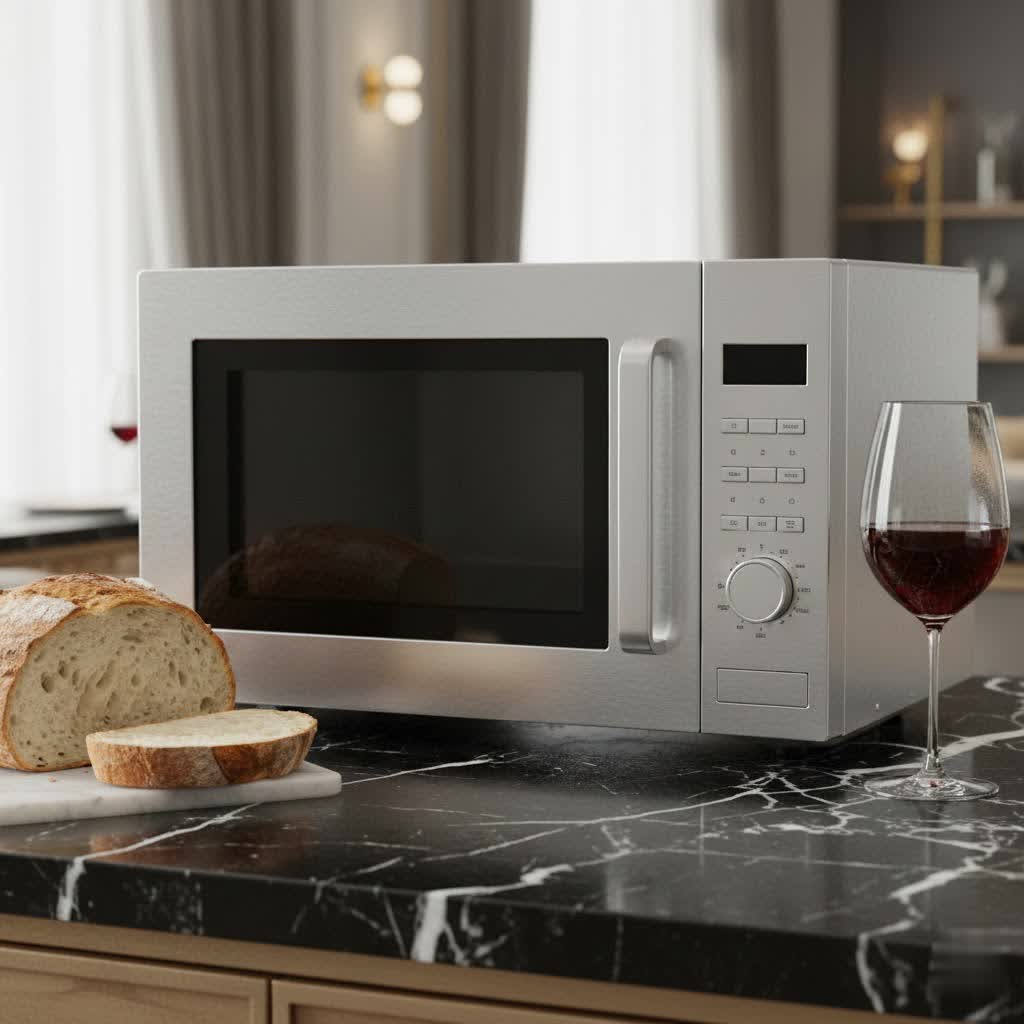
An over-the-range microwave is a versatile kitchen appliance uniquely designed to be installed above your cooktop, typically replacing a traditional range hood. It functions as a conventional microwave for heating, defrosting, and cooking, but also integrates a powerful exhaust fan to clear smoke, steam, and odors, along with built-in lighting to illuminate your cooking surface. This dual functionality makes it an excellent choice for optimizing kitchen space and creating a cohesive aesthetic.
The principle behind a microwave oven, including OTR models, relies on generating microwaves—a form of electromagnetic radiation. These waves excite water molecules within food, causing them to vibrate rapidly and generate heat, cooking the food from within. The history of the microwave dates back to the 1940s, evolving from a post-WWII discovery into the ubiquitous kitchen staple we know today, with OTR models emerging as a popular space-saving innovation.
Popular Over-the-Range Microwave Types
OTR microwaves come in various configurations, each catering to different cooking needs and kitchen designs. Understanding these types will help narrow down your options.
By Functionality
- Basic OTR Microwaves: These models primarily offer standard microwave functions like heating, defrosting, and simple cooking presets. They are ideal for households that mainly use their microwave for fundamental tasks.
- OTR Microwaves with Convection: A significant upgrade, these appliances combine microwave technology with convection cooking. This means they can also bake, roast, and brown food much like a conventional oven, offering greater versatility for more complex meals. They circulate hot air around food, perfect for achieving crispy textures.
- OTR Microwaves with Steam Cooking: Some advanced models incorporate steam cooking functions, utilizing steam to cook food gently, retaining moisture and nutrients, which is excellent for vegetables and delicate dishes.
- OTR Microwaves with Air Fryer: Newer innovations include air frying capabilities, allowing you to achieve crispy, fried textures with less oil, making healthier versions of your favorite fried foods.
|
Our Picks for the Best Microwave Oven in 2026
As an Amazon Associate I earn from qualifying purchases.
|
||
| Num | Product | Action |
|---|---|---|
| 1 | BLACK+DECKER EM720CB7 Digital Microwave Oven with Turntable Push-Button Door, Child Safety Lock, 700W, Stainless Steel, 0.7 Cu.ft |

|
| 2 | TOSHIBA EM131A5C-BS Countertop Microwave Ovens 1.2 Cu Ft, 12.4" Removable Turntable Smart Humidity Sensor 12 Auto Menus Mute Function ECO Mode Easy Clean Interior Black Color 1000W |
|
| 3 | Nostalgia Retro Compact Countertop Microwave Oven, 0.7 Cu. Ft. 700-Watts with LED Digital Display, Child Lock, Easy Clean Interior, Aqua |
|
| 4 | Chefman Countertop Microwave Oven 0.7 Cu. Ft., 700 Watts with 10 Power Levels, 6 Cooking Presets with One-Touch Express Cook, Eco Mode, Child Safety Lock, & Mute Button - Black |
|
| 5 | TOSHIBA ML-EM09PA(BS) Small Microwave Oven with 6 Auto Menus, Mute Function & Child Lock, LED Lighting, Perfect for Apartment, 0.9 Cu Ft, 10.6 Inch Removable Turntable, 900W, Black Stainless Steel |
|
| 6 | Beautiful 1.1 Cu Ft 1000W Sensor Microwave Oven – Compact Countertop with Smart Sensor Cooking, 10 Power Levels & Easy Clean Interior – Perfect for Quick Meals, Office & Holiday Hosting |
|
| 7 | TOSHIBA EM131A5C-SS Countertop Microwave Ovens 1.2 Cu Ft with 12.4" Removable Turntable Smart Humidity Sensor, 12 Auto Menus Mute Function ECO Mode Easy Clean Interior, 1000W, Silver |
|
| 8 | Farberware 1.1 Cu. Ft. Countertop Microwave Oven – 1000 Watts Power, Auto Cook Settings, Defrost, Easy Clean and Child Safety Lock - Stainless |
|
| 9 | Farberware 1.1 Cu. Ft. Countertop Microwave Oven – 1000 Watt Power, Auto Cook Settings, Defrost, Easy Clean and Child Safety Lock - Stainless |
|
| 10 | Farberware 1.1 Cu. Ft. Countertop Microwave Oven – 1000 Watts Power, Auto Cook Settings, Defrost, Easy Clean and Child Safety Lock - Stainless and Black |
|
By Installation Style
- Standard Over-the-Range: These are the most common type, mounted directly above the range, integrating into the existing cabinetry.
- Low-Profile Over-the-Range: Designed for kitchens with limited vertical space between the cooktop and upper cabinets, these models offer a slimmer design without significantly sacrificing internal capacity, maintaining a sleek, streamlined look.
By Technology
- Standard (Non-Inverter) Microwaves: These cycle power on and off to achieve lower power levels, which can sometimes lead to uneven cooking.
- Inverter Microwaves: Utilizing inverter technology, these microwaves provide a continuous, consistent power output at all settings. This results in more even cooking, better defrosting, and often more energy-efficient operation.
Choosing the Right Over-the-Range Microwave for Your Home
Selecting an OTR microwave involves considering several factors to ensure it meets your household’s demands, culinary aspirations, and kitchen layout.
Determine Your Usage Needs
Before diving into features, assess how you plan to use your microwave:
- Household Size: For 1-2 people, a smaller capacity (under 1.5 cu. ft.) might suffice. Larger families (3-4 or more) will benefit from medium to large capacities (1.6 cu. ft. and above) to accommodate bigger dishes.
- Frequency of Use: If you use your microwave daily for various tasks, investing in a model with advanced features and higher durability is worthwhile.
- Primary Purpose: Are you mainly reheating and defrosting, or do you desire capabilities like baking, roasting, or air frying? This will dictate whether a basic or a multi-functional convection/air fry model is best.
Capacity and Wattage Considerations
- Capacity (Cubic Feet): OTR microwaves typically range from 0.7 to 2.2 cubic feet. A common size for families is 1.6 to 2.0 cu. ft., offering ample space for most platters and casserole dishes. Small kitchens or single users might opt for compact models around 1.1 cu. ft.
- Wattage: This indicates cooking power. Most OTR microwaves fall between 600 to 1200 watts. A higher wattage, generally 1000 watts or more, ensures faster and more even cooking results. While higher wattage can mean quicker cook times, it also uses more energy, potentially leading to slightly higher energy bills.
Ventilation Power (CFM)
A crucial aspect of an OTR microwave is its integrated ventilation system, measured in Cubic Feet per Minute (CFM). This indicates how much air the fan can move in one minute.
- CFM Range: OTR microwaves typically offer ventilation from 300 to 450 CFM, though some premium models can reach up to 500 CFM or even higher. While dedicated range hoods can go up to 1200 CFM, an OTR microwave offers sufficient ventilation for most home cooking.
- Venting Type: You’ll find two main types:
- Recirculating: Air is drawn through filters (grease and charcoal) and then returned into the kitchen. This is common in apartments or where external ducting isn’t feasible.
- Ducted (External): Air is expelled outdoors through ductwork, offering more effective removal of smoke and odors. Many models are convertible, allowing you to choose the venting method.
Smart Features and Convenience
Modern OTR microwaves are packed with features designed to simplify your cooking experience:
- Sensor Cooking: This intelligent feature detects moisture levels in food and automatically adjusts cooking time and power for optimal results, preventing overcooking or undercooking.
- Pre-programmed Settings: Dedicated buttons for popular items like popcorn, pizza, or beverages take the guesswork out of cooking.
- Defrost Settings: Options for defrosting by weight or time ensure ingredients are thawed evenly.
- Turntable: A rotating glass tray ensures even heating. Many models allow you to turn off the turntable for larger, non-rotating dishes.
- Child Lock: Essential for safety, preventing accidental use by children.
- Cooktop Lighting: Built-in lights illuminate your stovetop, improving visibility while cooking.
- Easy-Clean Interiors: Surfaces like Cook Shield are designed for quick and easy wiping, resisting stains and splatters.
- Smart Features (Wi-Fi/Voice Control): Many newer models offer Wi-Fi connectivity, allowing you to control the microwave via a smartphone app (e.g., LG ThinQ, Samsung SmartThings), receive notifications, or even use voice commands through smart assistants. Some even have “scan-to-cook” technology, where you scan a barcode on packaged food for automatic cooking instructions.
Design and Aesthetics
OTR microwaves come in various finishes (stainless steel, black, white, black stainless steel) to complement your kitchen décor. Consider fingerprint-resistant finishes for easier maintenance. A flush built-in design can enhance the overall modern aesthetic of your kitchen.
Brand Reputation and Reviews
Choosing a reputable brand like GE, LG, Samsung, Whirlpool, KitchenAid, Panasonic, or Electrolux often ensures better quality, reliability, and customer support. Always check product reviews from other users to gain insights into real-world performance and potential issues.
Installation Requirements
OTR microwaves are designed to fit into a standard 30-inch cabinet opening, though 24-inch compact models are also available. Ensure you have adequate clearance from the cooktop surface (typically at least 30 inches) and from the floor (around 66 inches to the bottom of the cabinet for comfortable access). Installation usually requires basic electrical knowledge and cabinetry work, often making professional installation a recommended option.
Using and Maintaining Your Over-the-Range Microwave
To ensure the longevity and optimal performance of your OTR microwave, proper usage and maintenance are key.
Safe and Effective Usage
- Follow Manual Instructions: Always refer to your specific model’s user manual for detailed instructions on functions and safety precautions.
- Use Microwave-Safe Cookware: Avoid metal containers, as they can cause arcing.
- Ventilation: Use the exhaust fan while cooking on the stovetop to effectively remove smoke and odors, even if the microwave is not in use.
- Child Lock: Engage the child lock feature when the microwave is not in active use, especially in households with young children.
Cleaning and Maintenance
Regular cleaning is crucial to keep your OTR microwave hygienic and functioning well.
- Interior: Wipe down the interior after each use with a damp cloth to prevent food splatters from hardening and causing odors. For stubborn stains, a mixture of water and lemon juice or vinegar can be microwaved for a few minutes to create steam, loosening grime for easy wiping.
- Grease Filters: If your microwave has a recirculating vent, the grease filters (usually metal mesh) should be removed and washed monthly, or as needed, depending on cooking frequency. They are often dishwasher-safe.
- Charcoal Filters: For recirculating models, charcoal filters absorb odors and typically need to be replaced every 6-12 months. Consult your manual for specific replacement intervals and filter types.
- Exterior: Wipe the exterior surfaces with a soft cloth and a mild cleaner. For stainless steel, use a specialized stainless steel cleaner to prevent streaks and maintain its luster.
Common Over-the-Range Microwave Issues and Troubleshooting
Even with the best models, minor issues can sometimes arise. Knowing how to address common problems can save you a service call.
- Microwave Not Heating Food: Check if the door is properly closed. Ensure the power cord is securely plugged in. A blown fuse or circuit breaker could also be the culprit. If these simple checks don’t work, it might indicate a more complex internal issue, possibly with the magnetron, requiring professional repair.
- Turntable Not Rotating: Ensure the turntable is correctly seated on its support and the motor. Check for any food debris obstructing its movement.
- Excessive Noise During Operation: While some fan noise is normal, unusually loud or grinding noises could indicate an issue with the fan motor or turntable mechanism.
- Vent Fan Not Working: Check if the fan is simply off or if there’s an obstruction. If it’s running but ineffective, the filters might be clogged and need cleaning or replacement.
- Light Not Working: This is often a simple bulb replacement. Refer to your manual for instructions on how to safely replace the interior or cooktop lights.
For more complex problems, such as unusual smells, sparking, or persistent electrical issues, it is always recommended to disconnect the power and consult a qualified appliance technician. Attempting DIY repairs on electrical appliances can be dangerous.
Conclusion
Over-the-range microwaves are a smart, space-saving, and versatile addition to any kitchen, seamlessly combining powerful cooking capabilities with essential ventilation. By carefully considering your household’s needs, desired features like wattage, capacity, and ventilation power, and exploring options from reputable brands, you can find an OTR microwave that not only meets your culinary demands but also enhances the overall efficiency and aesthetic of your kitchen. Remember to prioritize proper installation, consistent maintenance, and timely troubleshooting to enjoy years of convenient and reliable performance from this indispensable appliance.
What culinary creations will you bring to life with your new over-the-range microwave?
Frequently Asked Questions
Is an over-the-range microwave as good as a dedicated range hood?
While dedicated range hoods typically offer higher CFM and more powerful ventilation, modern over-the-range microwaves provide effective smoke, steam, and odor removal for most home cooking, often with CFMs ranging from 300-450. For serious cooks who frequently engage in high-heat cooking, a standalone range hood might be more suitable, but for general use, an OTR microwave is a highly functional two-in-one solution.
How much space do I need to install an over-the-range microwave?
You generally need a 30-inch wide opening above your range. Crucially, there should be at least 30 inches of clearance between the cooktop surface and the bottom of the upper cabinet where the microwave will be mounted. The overall height from the floor to the bottom of the microwave cabinet should be around 66 inches for comfortable and safe access.
Can I install an over-the-range microwave myself?
While installation kits and instructions are provided, installing an over-the-range microwave involves electrical wiring, securely mounting a heavy appliance, and potentially connecting ductwork. Due to the complexity and safety considerations, professional installation is often recommended, especially if you are not experienced with appliance installations or electrical work.
What is sensor cooking in an over-the-range microwave?
Sensor cooking is a convenient feature that uses humidity sensors to detect the amount of steam released by food during cooking. Based on these readings, the microwave automatically adjusts the cooking time and power level to ensure food is cooked thoroughly and evenly, eliminating the need for manual time adjustments and preventing overcooking.
What is the average lifespan of an over-the-range microwave?
The average lifespan of an over-the-range microwave typically ranges from 7 to 10 years, depending on the brand, usage frequency, and how well it is maintained. Regular cleaning, proper use, and timely replacement of filters can help extend its operational life.
